300 g per section
The lightweight units are easy to transport and handle during installation.
Sections of 50 cm, 100 cm or 200 cm connect with cables and fixed-length wire ropes that maintain the specified measurement spacing.


Subsurface displacement monitoring
The RT-1015 is a lightweight in-place inclinometer string for slopes, dams, mine slopes and excavations. Sections weigh approximately 300 g each and connect on site to measure lateral displacement, tilt and temperature at different depths. Recommended for boreholes up to 60 m, with a maximum installation depth of 100 m.
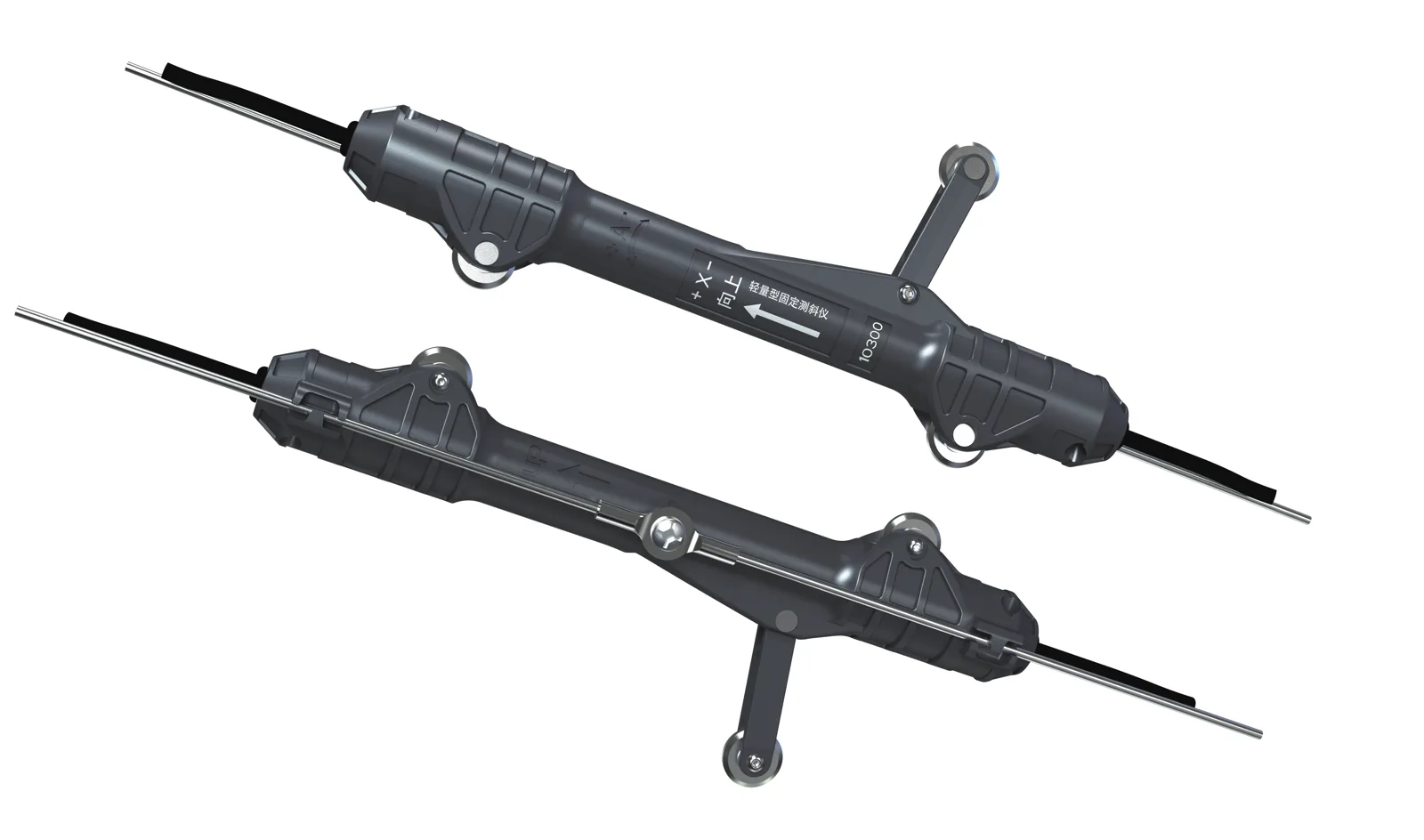
Features
The lightweight units are easy to transport and handle during installation.
Sections of 50 cm, 100 cm or 200 cm connect with cables and fixed-length wire ropes that maintain the specified measurement spacing.
Measurements at different depths form a borehole deformation profile, with a displacement accuracy of 1 mm per 50 m.
Each unit records tilt and temperature. Automatic temperature compensation reduces the effect of temperature changes on the measurements.
High-strength composite material and 304 stainless steel housings support long-term installation in boreholes containing groundwater.
The maximum site water pressure must remain within the product rating.
Standard Modbus, ASCII and a proprietary hexadecimal protocol support dedicated data loggers and compatible third-party acquisition equipment.
An optional combined sensor adds groundwater level and water temperature measurements.
Installation depthFor deeper installations, see the power, communication and installation requirements under Configuration.
View configuration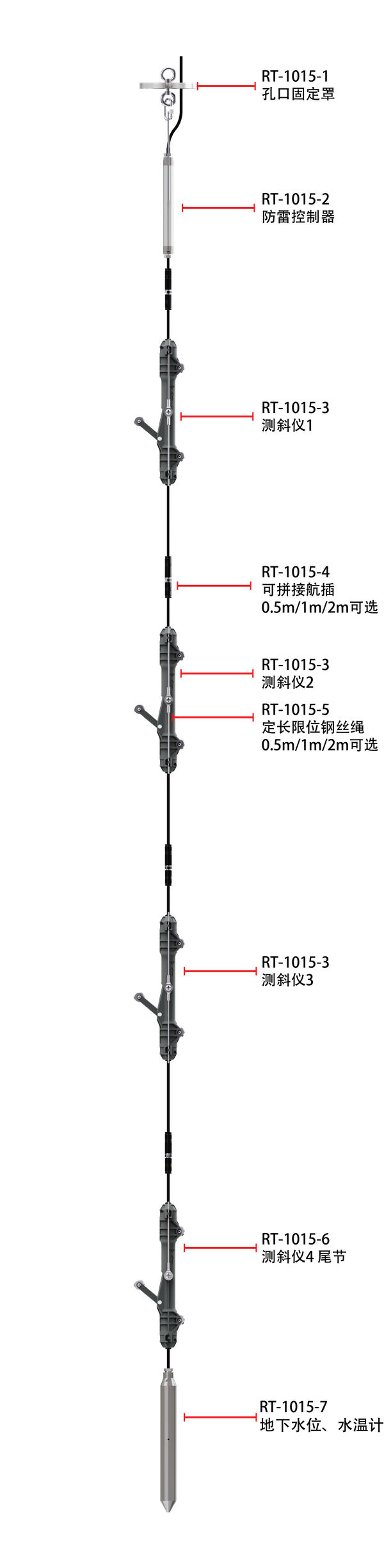
Installation
The string is assembled on site, suspended from a borehole collar cover and held under tension by a bottom weight. A data logger supplies power and reads the connected sensors.
Choose 50 cm, 100 cm or 200 cm sections. Connect them with cables and fixed-length wire ropes to maintain the specified measurement spacing.
The suspension cover holds the string at the collar and maintains the installation depth.
The weight keeps the string under tension. An optional combined groundwater level and water temperature sensor can be fitted to the bottom assembly.
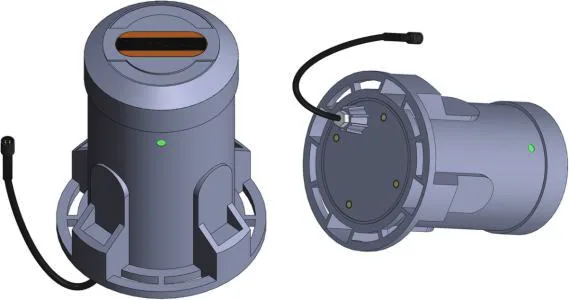
Dedicated data loggers or compatible third-party equipment provide the power and data connection.
Configuration
Start with borehole depth and measurement spacing. Then select the bottom assembly and acquisition equipment.
Contact usApplications
Locate deformation zones by comparing lateral displacement at different borehole depths over time.
Track internal lateral movement in shallow and intermediate-depth boreholes within dams and the surrounding ground.
Measure subsurface movement in boreholes on mine benches and in areas affected by mining and blasting.
Track lateral movement in retaining structures and surrounding ground at different depths during construction.
Technical data
Measurement, environmental and interface specifications for system selection.
Resources
For installation depth, operating current and configuration options, see the specifications on this page.
Our engineers can provide installation guidance and protocol documentation for the selected configuration.
Contact usSelection & integration
The RT-1015 suits lightweight on-site assembly in shallow and intermediate-depth boreholes. The RT-1010 suits deeper holes, longer strings or higher precision and water pressure requirements. It can contain up to 400 sections, with a high-pressure version rated to 4.5 MPa.
Use 50 cm sections where local deformation needs closer measurement spacing. The 100 cm length balances measurement density and installation effort; 200 cm reduces the number of units in longer strings.
The RT-1015 measures lateral displacement in two horizontal directions. Each unit also records tilt and temperature.
Yes. Add the optional combined groundwater level and water temperature sensor to measure both at its installation location.
The housings are rated IP68, with 2 MPa water pressure resistance, for long-term borehole installation. Check the maximum water pressure at the site before specifying the system.
Use a dedicated terminal or compatible third-party equipment. The RT-1015 communicates over RS485 using standard Modbus, ASCII or a proprietary hexadecimal protocol.
Borehole depth, measurement spacing, groundwater conditions, available power supply and data connection requirements. These determine the section lengths, section count, bottom assembly and acquisition equipment.
Planning a monitoring project?