Horizontal displacement
Calculated from changes in tilt and the spacing between measurement points to form a depth–displacement profile.

Subsurface displacement monitoring
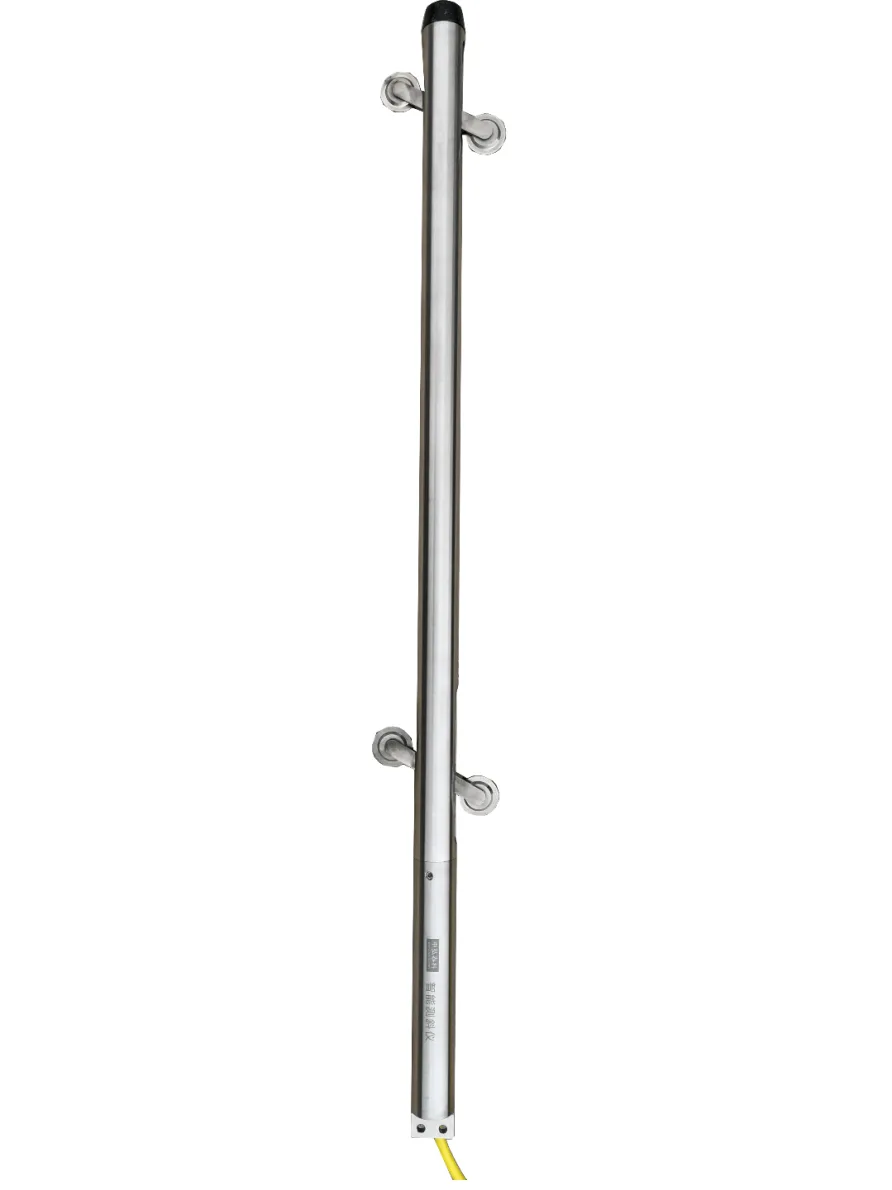
Installed at selected depths, the RT-1020 continuously measures tilt, temperature and supply voltage to support displacement analysis along a borehole. It is suited to long-term monitoring of slopes, dams, open-pit slopes, tailings facilities and excavations.
Measurement capabilities
The RT-1020 remains fixed at selected depths to measure tilt, temperature and supply voltage. Tilt readings and installation spacing are used to calculate horizontal displacement at different depths.
Calculated from changes in tilt and the spacing between measurement points to form a depth–displacement profile.
Tracks changes in tilt at each installed depth, providing the input for subsurface displacement calculations.
Records borehole temperature for temperature compensation and analysis of changing environmental conditions.
Monitors sensor supply voltage to help assess power conditions in the field.
Borehole installation
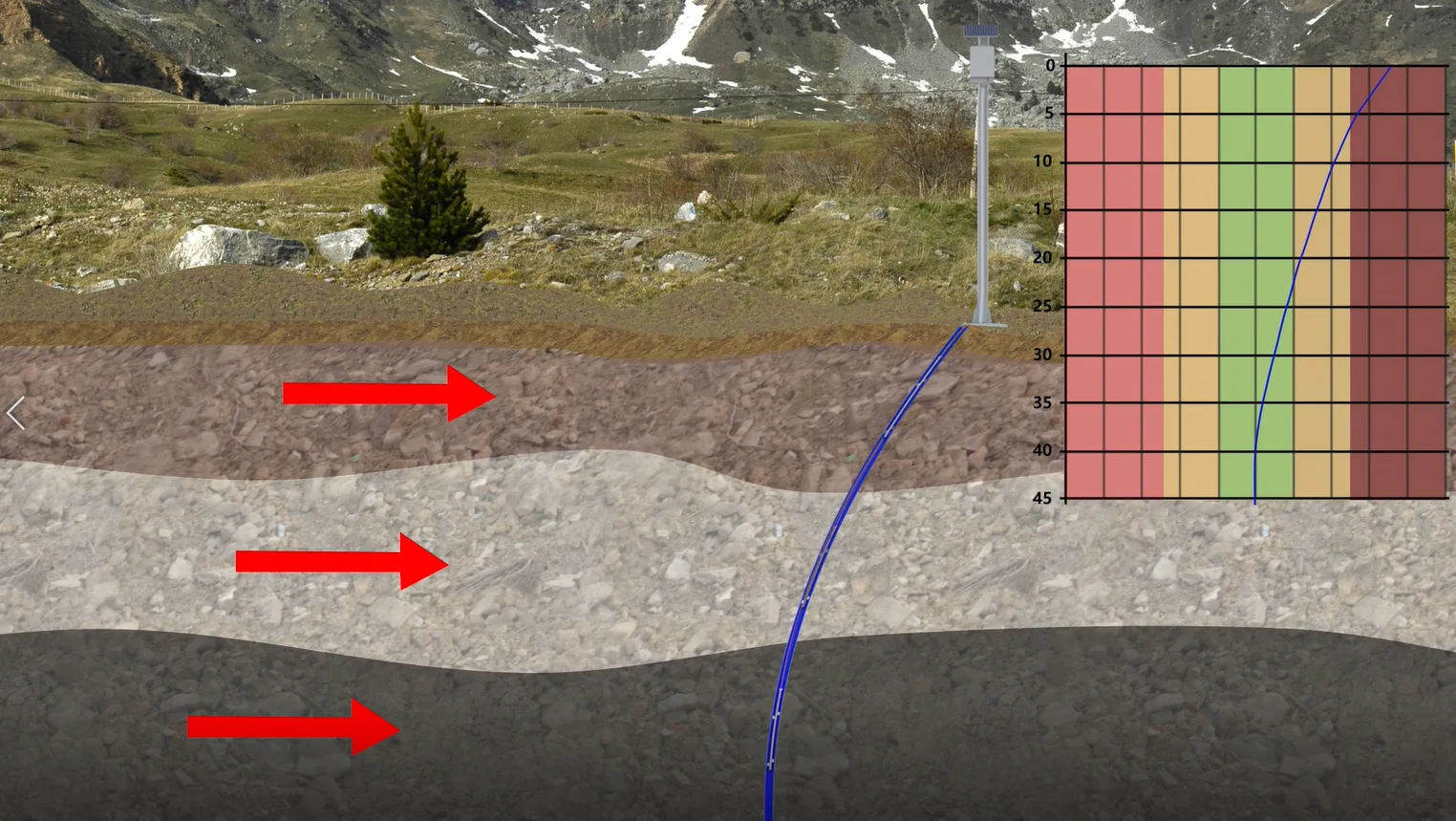
Select installation depths according to borehole depth, ground conditions and the zones of interest. Sensors remain fixed at each level to track tilt changes and calculate horizontal displacement.
 View full-size diagram
Set sensor positions and spacing around the depths of interest to measure deformation at different levels.
Positioning components hold the sensor orientation and measurement position for stable long-term monitoring.
Connect measurement points to an acquisition terminal through RS485 to obtain a borehole depth–displacement profile.
Product benefits
Designed for fixed-depth borehole monitoring, the RT-1020 combines measurement precision, environmental protection and straightforward system integration.
Suited to small tilt changes and long-term monitoring at fixed depths.
Place sensors according to ground conditions and the zones of interest to track deformation along the borehole.
Sealed construction supports long-term monitoring in boreholes containing groundwater.
The RS485 interface and standard Modbus protocol support connection to data acquisition terminals and third-party monitoring systems.
Typical applications
The RT-1020 monitors selected depths in boreholes for tailings facilities, open-pit mines, slopes, landslides and excavations.
Long-term stability monitoring at key depths in dam bodies and slopes around the facility.
Monitor deep displacement in ground layers affected by excavation and blasting.
Track tilt and horizontal displacement at critical depths within a slope.
Monitor horizontal displacement at different depths in retaining structures and surrounding ground.
Product demonstration
This 3D product demonstration shows the RT-1020 sensor body, positioning components and overall assembly.
Download product demonstrationTechnical data
Product resources
The brochure is an earlier edition. Some specifications have since been updated; refer to this page and confirm project requirements with our technical team.
Selection & use
The RT-1020 is suited to precise, long-term monitoring at selected borehole depths. The lightweight RT-1015 supports on-site assembly for shallow-to-medium-depth boreholes. The RT-1010 supports continuous measurement along multiple depths for horizontal displacement and settlement, with optional groundwater level, water temperature and multi-depth settlement measurements.
Tilt changes at fixed depths are combined with the installation spacing and initial reference to calculate horizontal displacement. Multiple measurement points form a depth–displacement profile.
Monitoring depths are normally selected around geological layers, potential slip surfaces and zones where deformation is of interest. Sensor quantities and spacing can be configured for the project.
The sensor uses 304 stainless steel, is sealed to IP68 and is rated for a maximum water pressure of 2MPa. Confirm suitability for the site water pressure and water corrosivity when selecting the product.