
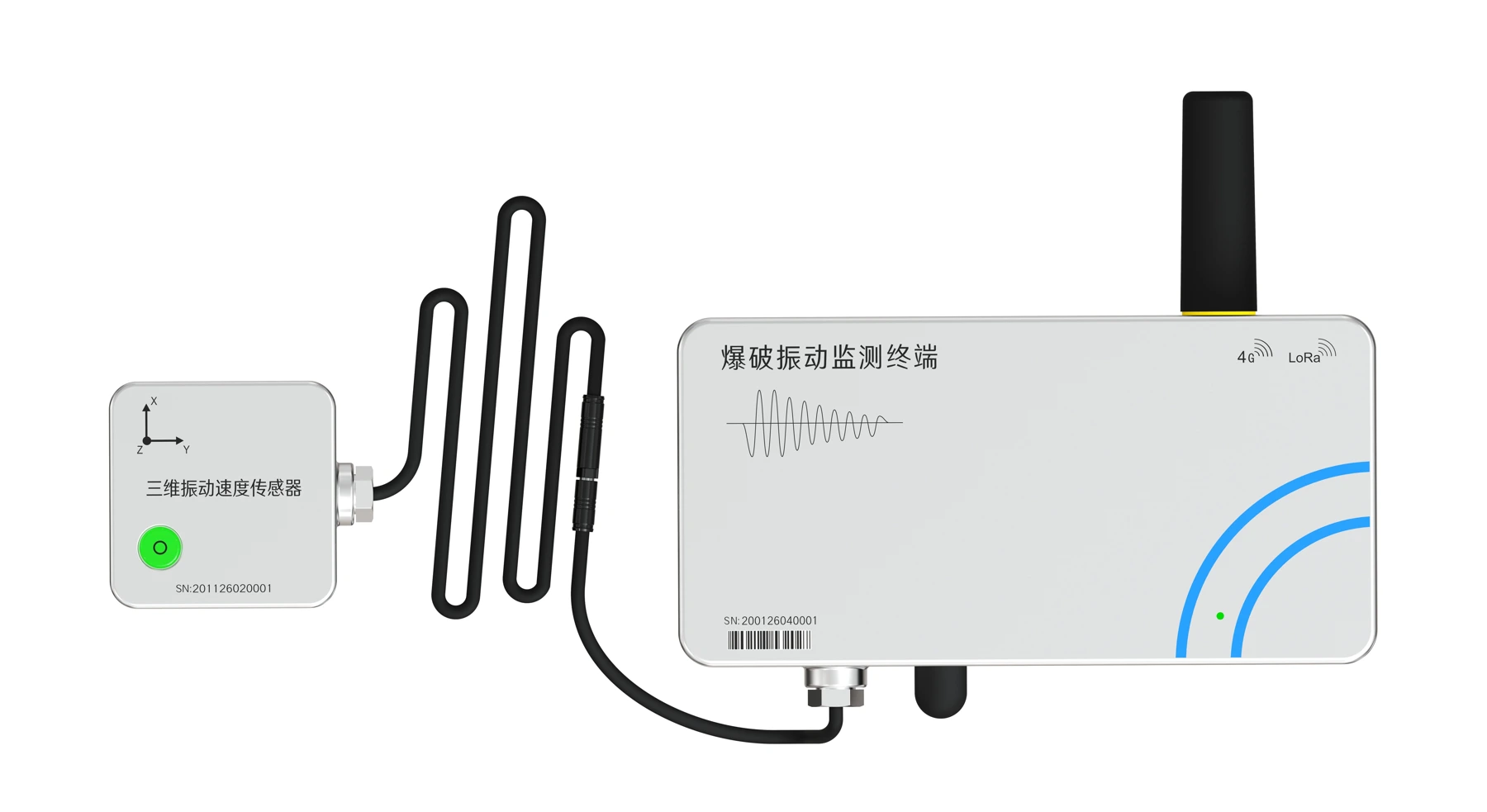
Capture the event at the monitored structure
Blast vibration is a short-duration event. Assessment needs the three-component velocity waveform and peak values, together with a clear record of where and how the event was measured. Trigger settings and the acquisition window must be chosen to capture the event of interest.
The same approach can be used for vibration from dynamic compaction and piling near structures, with settings and evaluation criteria matched to the work and monitored object.
What to measure and record
- Three-component vibration velocity waveforms and peak values
- Sampling rate, trigger threshold and pre-trigger time
- Monitoring-point location and event timestamp
- Monitor communication and battery status
- Separate structural tilt measurements where required by the monitoring plan
Recommended instruments
The RT-2001 Blast Vibration Monitor uses a triaxial geophone to acquire, store and transmit vibration-velocity waveforms. Separate instruments provide structural tilt measurements on nearby buildings, bridges or unstable rock masses where the monitoring plan requires them.
Vibration-triggered reports from a wireless tiltmeter do not replace dedicated waveform acquisition for blast assessment.
Installation notes
Couple the triaxial geophone securely to the monitored object and orient it toward the blast source as specified in the installation plan. Use the magnetic control or app to initiate a single acquisition after installation. Check the waveform, communication path and platform record before leaving the point in service.
Frequently asked questions
How are records collected without 4G coverage?
The RT-2001 stores event records locally. A technician can retrieve them over Bluetooth with the Android app and synchronize them to the platform when the phone is online. Optional LoRa Mesh relays provide a remote route to an RT-2001 gateway with stable 4G coverage. This requires compatible hardware, firmware and node settings, with the complete route tested on site.