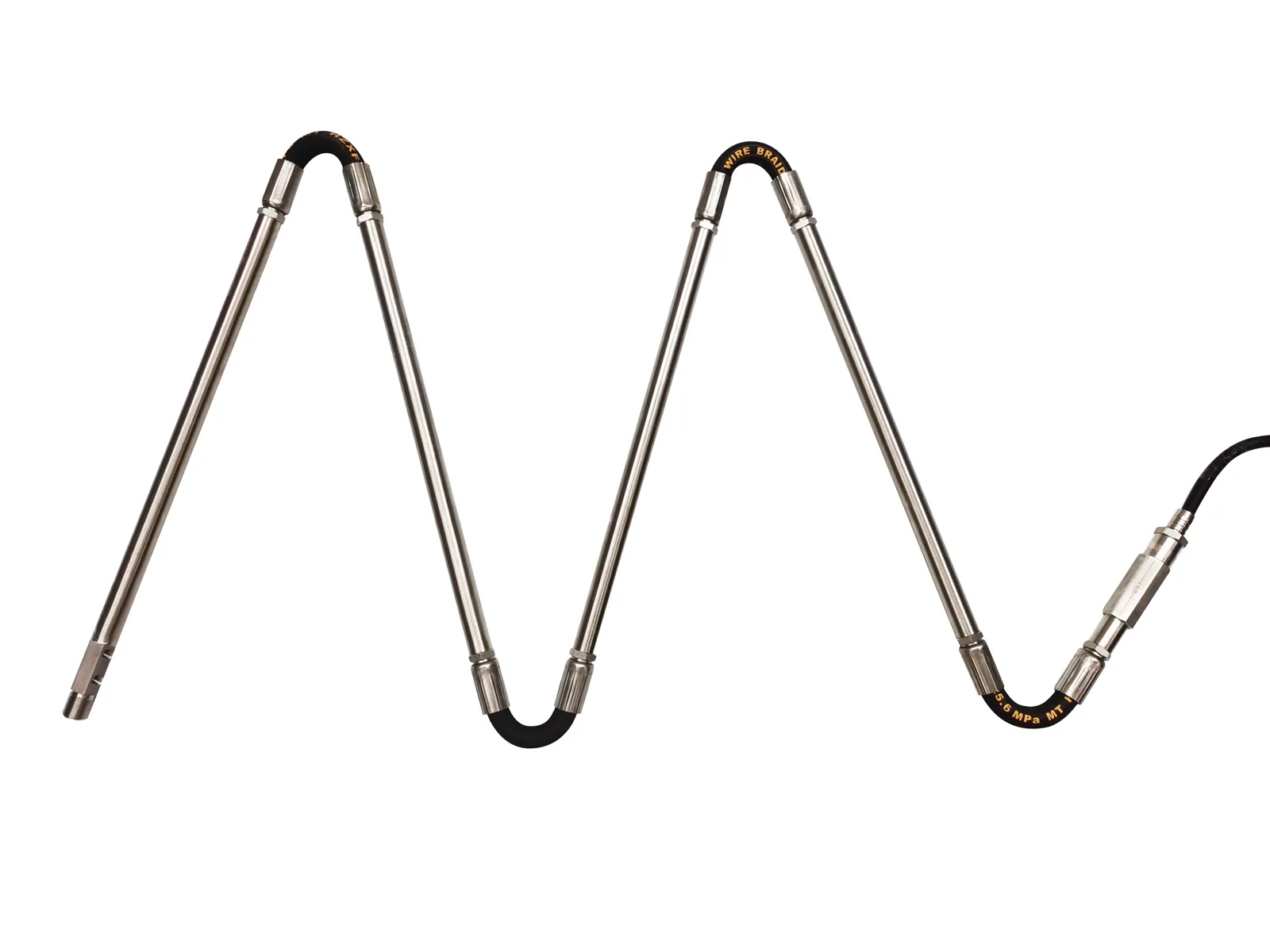
Installed continuously along a borehole, the RT-1010 automatically measures lateral displacement at different depths, reducing repeated manual inclinometer surveys. Optional components integrate groundwater level, water temperature and settlement monitoring at multiple depths in the same borehole, reducing the need for additional boreholes.
Primarily designed for subsurface displacement, with horizontal settlement and arched convergence applications.
01
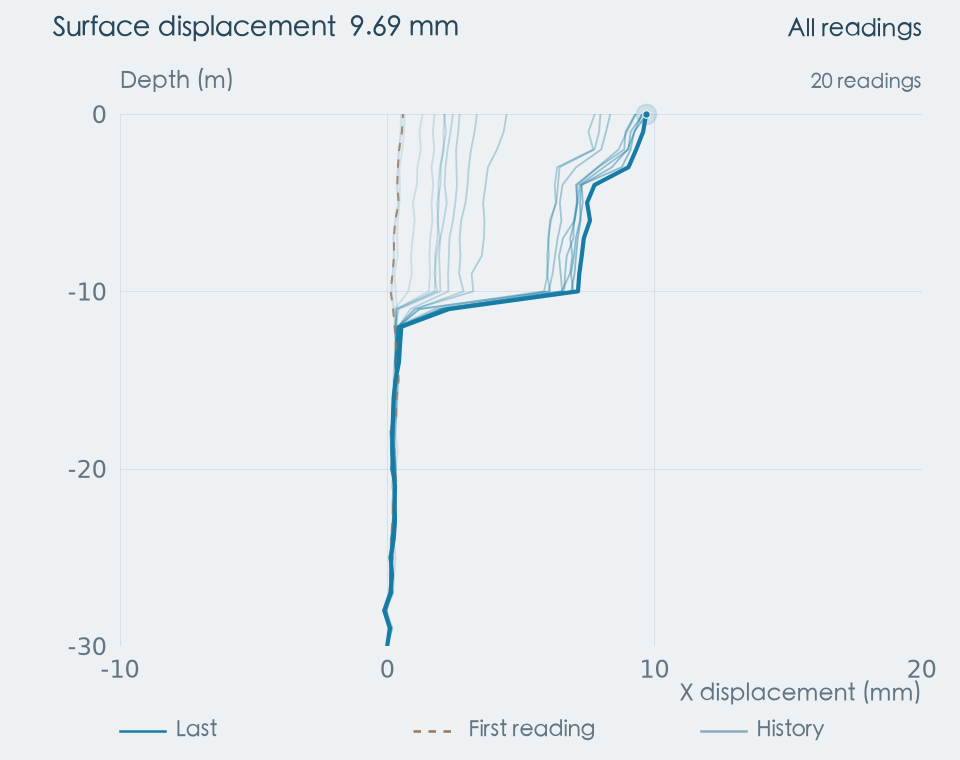
Subsurface lateral displacement
Vertical installationTailings dams, open-pit mines, slopes and landslides, excavations
Installed vertically inside borehole inclinometer casing, the array continuously measures lateral displacement at different depths. Comparing profiles over time helps identify depths where deformation is concentrated.
02
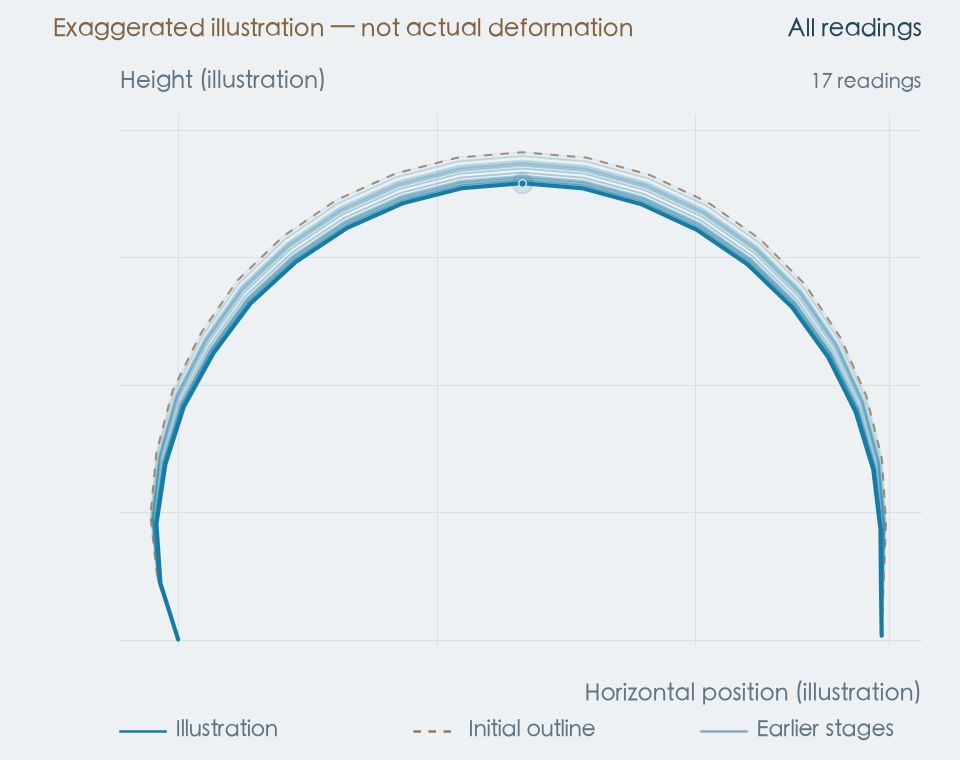
Convergence
Arched installationTunnel and pipeline cross-sections
Installed in an arch along a structural cross-section, the array measures convergence at each point relative to one end. Comparing cross-sectional profiles from different dates reveals changes in the structure's shape.
03
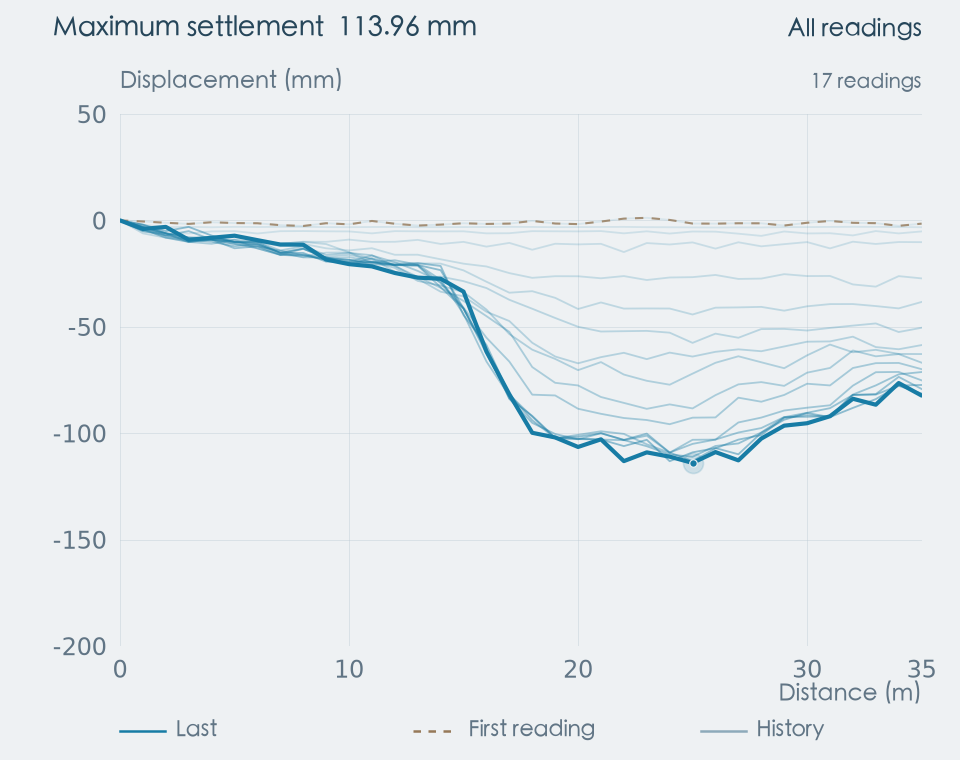
Settlement profiling
Horizontal installationRoadbed and dam settlement
Installed horizontally along a roadbed or dam, the array measures settlement at each position relative to one end. Profiles show the distribution of settlement along the monitoring line and how it changes over time.
Example profiles use different installation arrangements; they are not simultaneous outputs from one string. The animations follow the sampling dates.
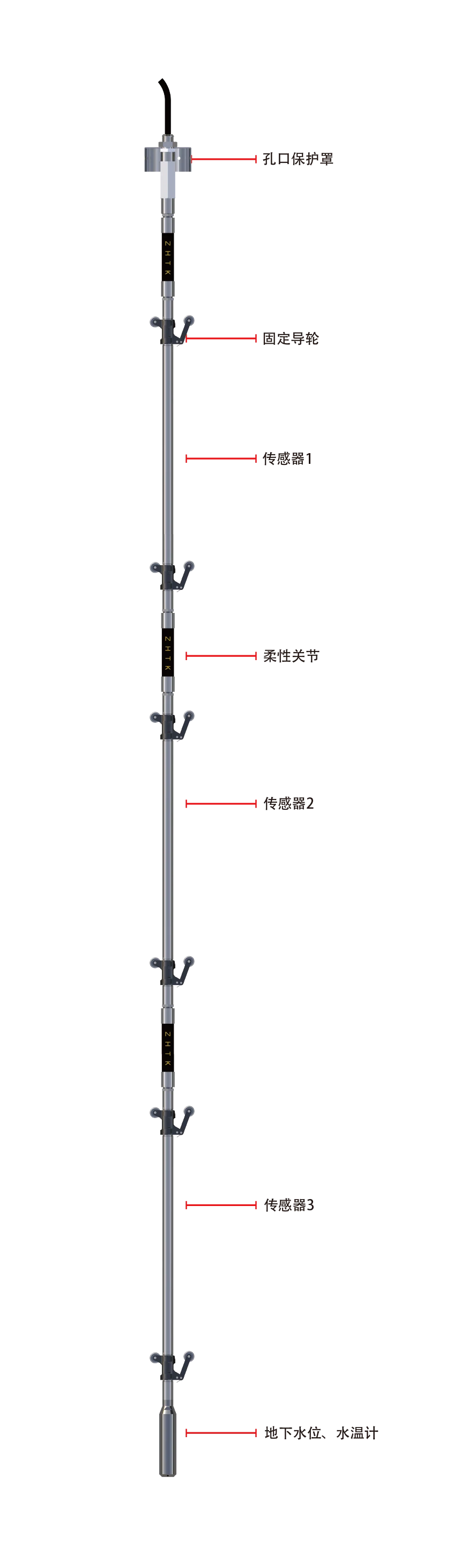
Borehole installation · Original Chinese diagram
Installation
Automated measurements along the borehole
The continuous flexible sensor string is installed along inclinometer casing and secured with fixing and protection components at the borehole opening. Connect it to an RT-1000 or RT-2000 data logger, or the project's existing data acquisition equipment, for automatic measurements.
Add monitoring functions in the same borehole
Groundwater level and water temperatureOptional
A water-level sensor integrated at the bottom of the string measures groundwater level and water temperature together. Combine these readings with displacement data to assess the relationship between water-level changes and deformation.
Settlement at multiple depthsOptional
Settlement monitoring components can be integrated into selected sections. Used with magnetic settlement rings, they measure settlement of soil layers at different depths.
RT-1010 Shape Array installation video (Chinese)
This Chinese-language video demonstrates accessory preparation, guide-wheel installation, sensor insertion, top fixing and software setup. Use it for installation reference and team training; watch online or download the complete video.
Built-in temperature measurement enables automatic temperature compensation to reduce the effects of temperature changes on readings. Settlement and convergence monitoring also include automatic torsion correction.
Protection for demanding field conditions
A sealed waterproof structure with lightning and electrostatic protection is designed for submerged boreholes and long-term outdoor monitoring. Select the appropriate product version for the site's water pressure.
Straightforward integration
An RS485 interface supports standard Modbus, ASCII and a proprietary hexadecimal protocol for connection to data acquisition equipment and monitoring systems.
Product selection
Configure the array for the monitoring task
Confirm the monitoring target and installation arrangement, then select the section length, precision version and integrated components. Finally, check water pressure, power and data acquisition requirements.
01String length and section length50cm / 100cm / 200cm
Choose the section length based on installation direction, total monitoring length and the deformation locations of interest. A complete sensor string supports up to 400 sections. Shorter sections provide more detail on localized deformation.
Choose the high-precision or standard-precision version based on the deformation to be detected and the required long-term stability. See the specifications for inclination accuracy, displacement resolution and displacement stability.
03Integrated borehole componentsGroundwater level and water temperature / Settlement at multiple depths
The water-level sensor is integrated at the bottom of the string, with a 40m or 90m range. Settlement components are positioned at the required depths, with a 700mm range and a choice of ±1mm or ±3mm accuracy.
04Water pressure and materialsStandard: 2MPa / High-pressure: up to 4.5MPa
Select the standard or high-pressure version for the maximum water pressure, and confirm seal and material suitability for the surrounding medium. Standard products use 304 stainless steel; 316L stainless steel can be specified for seawater applications.
Provide the installation direction, string length, monitoring functions, precision requirements and maximum water pressure, along with site power and data acquisition details, to confirm the complete configuration.
Specifications
RT-1010 specifications
For product selection and system integration. Final configuration is subject to technical confirmation.
Technical Specifications
Measurement and configuration
Installation arrangements
Vertical, horizontal or arched
Deformation monitoring applications
Subsurface lateral displacement, settlement profiling and convergence (with different installation arrangements)
Core measurements
Displacement, inclination and temperature
Additional monitoring
Groundwater level and water temperature; settlement at multiple depths (optional)
The Chinese product brochure and installation video are available for public download. If a document version differs from the specifications on this page, refer to the latest technical confirmation. Contact the technical team for installation and communication development documentation.
Selection & integration
Frequently asked questions
Can the RT-1010 connect to existing data acquisition equipment and monitoring systems?
Yes. The RT-1010 uses an RS485 interface and supports standard Modbus, ASCII and a proprietary hexadecimal protocol. Check power supply, protocol and channel configuration during equipment selection. RT-1000 and RT-2000 data loggers are also available.
Can one system provide every monitoring function at the same time?
The available functions depend on the installation arrangement and selected components. Vertical borehole installation primarily measures subsurface lateral displacement; groundwater level, water temperature and settlement at multiple depths require the corresponding components. Settlement profiling uses horizontal installation, while convergence uses arched installation. These applications do not all operate simultaneously by default on one sensor string.
How does built-in temperature measurement differ from water temperature monitoring?
Built-in temperature measurement supports automatic temperature compensation. Water temperature is measured by the optional combined groundwater-level and water-temperature sensor. Their purposes and measurement locations differ, so select the configuration for the actual monitoring requirements.
What reference is used for the displacement profiles?
Displacement along the sensor string is calculated from section inclination and section length, relative to a selected reference point. Confirm the reference point and initial measurement state during installation, then compare subsequent deformation using the same reference.
Start with your monitoring needs
Find the right monitoring configuration for your project